Friday, December 5, 2014
Blogging Sax Rohmer…In the Beginning, Part Five
“The Secret of Holm Peel” was first published in Cassell’s in December 1912 and was the last story Arthur Henry Ward published under the byline of Sarsfield Ward [having dropped the first initial A.]. Rohmer scholar Robert E. Briney rescued it from obscurity for the 1970 Ace paperback Rohmer collection of the same name. Gene Christie later selected the story for inclusion in the first volume of Black Dog Books’ Sax Rohmer Library, The Green Spider and Other Forgotten Tales of Mystery and Suspense in 2011.
The story’s inspiration can be found in Rohmer’s article, “The Phantom Hound of Holm Peel” which was first published in Empire News in February 1938 and was later collected by Rohmer scholars Dr. Lawrence Knapp and John Robert Colombo in the 2012 Battered Silicon Dispatch Box collection of Rohmer’s articles, Pipe Dreams: Occasional Writings of Sax Rohmer. The article was later recounted by Rohmer’s widow, Elizabeth Sax Rohmer and his former assistant, Cay Van Ash in their 1972 biography of the author, Master of Villainy as well as by the aforementioned John Robert Colombo in his 2014 collection, A Rohmer Miscellany.
The story itself is a well-written Gothic romance set on the Isle of Man at the estate of Holm Peel. Rohmer brews a delightful concoction of past life obsession, a ghostly hound, the curse of a suicide, family drama, and a daring jewel heist. The trouble is the jarring changes in narrative voice give the story an awkward, at times amateurish feel that undermines the strength of the otherwise polished narrative.
TO CONTINUE READING THIS ARTICLE, PLEASE VISIT THE BLACK GATE.


Saturday, November 15, 2014
Blogging Sapper’s Bulldog Drummond, Part Seven – Temple Tower
Temple Tower (1929) was the sixth Bulldog Drummond novel and marked a departure from the series formula. Having killed Carl Peterson off at the conclusion of the fourth book and dealt with his embittered mistress Irma’s revenge scheme as the plot of the fifth book, Sapper took the series in an unexpected direction by turning to French pulp fiction for inspiration.
Sapper also placed Hugh Drummond in a supporting role and elevated his loyal friend Peter Darrell to the role of narrator. The subsequent success of the venerable movie series and the future controversies generated by Sapper’s reactionary politics and bigotry obscured the versatility of his narratives and led to his being under-appreciated when considered with his peers.
French pulp literature from the mid-nineteenth to the early twentieth century was particularly rich. While Jules Verne and Alexandre Dumas remain the best known French pulp authors of the era, Paul Feval’s highly influential swashbuckler, Le Bossu [“The Hunchback’] (1857) and his expansive criminal mastermind saga, Les Habits Noirs [“The Black Coats”] (1844 -1875) did much to set the stage for Pierre Souvestre and Marcel Allain’s long-running absurdist thriller series, Fantomas (1911 – 1963) as well as Arthur Bernede’s seminal masked avenger Judex (1916 – 1919). Pioneering French filmmaker, Louis Feuillade adapted both Fantomas and Judex to the silent screen as well as creating his own epic Apaches crime serial, Les Vampires (1915 - 1916).
TO CONTINUE READING THIS ARTICLE, PLEASE VISIT THE BLACK GATE.
Friday, October 31, 2014
Sax Rohmer at Towers of London
A couple weeks ago I finally read Mr. Towers of London, the posthumously published memoirs of Harry Alan Towers, the unflappable veteran British radio/TV/film writer-producer with well over a hundred works to his credit. It wasn’t Towers’ first stab at writing his memoirs, but this final work was notable as his most personal. Anyone who actually knows major figures in the entertainment industry is likely aware of some of the salacious stories of debauchery, sometimes even criminal activity that are never far from the surface. Towers’ memoirs are unique for being perhaps the most honest ever committed to print. If he pulls any punches or whitewashes any parts of his adventures, he can surely be forgiven for what he does dish out about himself or others.
That said, the most disappointing part of the book for me is that he tells the reader very little about his experiences as a writer. I would have loved to have understood more about the more private side of his profession as the book places all of the emphasis on his role as a producer. Today, he is unfairly remembered as the producer of genre films and exploitation fare. While that accounted for much of his output after the 1960s, he was also a respected writer-producer of family drama who frequently cast some of the biggest stars in Hollywood in his radio, TV, and film productions.
TO CONTINUE READING THIS ARTICLE, PLEASE VISIT THE BLACK GATE.
Friday, October 24, 2014
The Solar Pons - Fu Manchu Connection
My colleague Bob Byrne has already introduced many new readers to August Derleth’s wonderfully tongue-in-cheek exploits of the unlikely-named Sherlock Holmes-inspired consulting detective, Solar Pons of Praed Street. Derleth loved tossing in nods to mystery works outside of Sir Arthur Conan Doyle’s fictional universe. These included three memorable encounters with Sax Rohmer’s insidious Dr. Fu Manchu.
“The Adventure of the Camberwell Beauty” was the first of the appearances to see publication in 1958. The story presents an unnamed Dr. Fu Manchu hiring the celebrated consulting detective to recover Karah, his beautiful young ward who has been abducted by his rival, Baron Corvus. The tale is set in the early 1930s and although the first chronicled, it is not our heroes’ first encounter with the Devil Doctor. Structured as a tribute to Rohmer’s 1933 novel, The Bride of Fu Manchu, the story reveals Karah (named for Rohmer’s Karamaneh) as the granddaughter of the Devil Doctor. Showing a nice bit of fidelity to Rohmer’s early tales, the unnamed Doctor resides in an underground Thames-side lair in Limehouse.
TO CONTINUE READING THIS ARTICLE, PLEASE VISIT THE BLACK GATE.
Wednesday, October 8, 2014
Frayling tackles his own Yellow Peril
The centennial of Sax Rohmer’s Fu Manchu character is a topic I have covered both for the anniversary of the Devil Doctor’s first appearance in the story, “The Zayat Kiss” in 1912 and the publication of the first novel (really a fix-up of stories), The Mystery of Dr. Fu-Manchu in 1913.
While Rohmer and the character are largely forgotten outside of pulp circles today, the legacy of the criminal mastermind is alive and well in film and comics. The concept of the Yellow Peril from an era when the broad term Oriental grouped together people from parts of Eastern Europe with all of Asia and the Middle East may sound anachronistic, but given the continued delicate relations between the Middle East and the West, those same fears personified are still the stuff of fiction and paranoia well over a century on.
Sax Rohmer did not invent the criminal mastermind nor was he the first to capitalize on the Yellow Peril for works of fiction. What he did do was create an archetype that managed to embody and transcend the fears of a foreign other to instead personify the fear of Western society falling to a superior intellect operating under a completely different set of values. Rohmer did this better than anyone before and while Fu Manchu as a name may seem ridiculous, the concept of the character is still with us from James Bond films to the media’s portrayal of terrorist leaders in the 21st Century.
TO CONTINUE READING THIS ARTICLE, PLEASE VISIT THE BLACK GATE ON FRIDAY.
Friday, October 3, 2014
Renner & Quist at Their Very Best
Samhain Publishing has just ushered in Closing Time, their third Renner and Quist occult mystery from author Mark Rigney. Longtime readers of my articles will recall The Skates and Sleeping Bear, which introduced me to Rigney’s oddball double act. Renner is a persnickety Unitarian minister while Quist is a boorish ex-linebacker. Together, this unlikely duo team to solve occult mysteries.
This latest addition to the quirky and delightful series takes our heroes from their usual Michigan stomping grounds to downtown Columbus, Ohio. It seems a long-demolished hotel is doing its best to return to existence. It currently inhabits its original location in another dimension complete with guests and staff from past decades co-existing. These include such celebrated faces from the past as Amelia Earhart, James Thurber, Charles Dickens, and Marilyn Monroe.
TO CONTINUE READING THIS ARTICLE, PLEASE VISIT THE BLACK GATE.
Wednesday, September 24, 2014
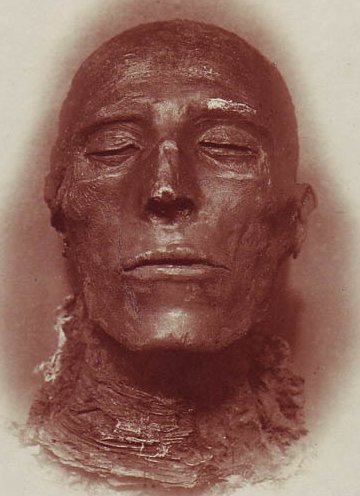
Meet The Mad Mummy
I was first introduced to Mike Vosburg’s work through my love of Sax Rohmer. His wonderful artwork graced Master of Villainy, the 1972 biography of Rohmer by the author’s widow and Cay Van Ash. Later, I would discover Mike’s artwork also appeared in The Rohmer Review fanzine. Many more years later, I was fortunate enough to have Mike provide the back cover illustration to my second Fu Manchu book. He also gave my daughter a gift of autographed copies of some of his professional work which made her feel like the luckiest nine year old girl on the planet. I don’t claim to know the man well, but I adore his work and know him as a genuinely kind and generous artist.
The influence of Sax Rohmer is never far away from Mike’s art. From his early professional work for Marvel Comics with The Deadly Hands of Kung Fu (featuring Shang-Chi, the son of Fu Manchu) to Offcastes, his 1993 Epic Comics limited series set on a future Earth that parallels the colonialism of the past right down to classic Yellow Peril elements including the Zayat Kiss; Rohmer’s shadow looms large. Today, Mike is best known as an award-winning storyboard artist for the Hollywood majors. He still has his hands in the indie comic world, though with such titles as Retrowood, Lori Lovecraft, and his latest creation, The Mad Mummy.
TO CONTINUE READING THIS ARTICLE, PLEASE VISIT THE BLACK GATE ON FRIDAY.
Saturday, September 20, 2014
Blogging Sapper’s Bulldog Drummond, Part Six – The Female of the Species
Sapper’s The Female of the Species (1928) is quite likely the best book in the long-running Bulldog Drummond thriller series. It’s one failing comes late in the narrative and spoils it as assuredly as Mickey Rooney’s bucktoothed yellow-face performance as Mr. Yunioshi sours Breakfast at Tiffany’s (1961) for modern audiences. As a devoted fan of both Blake Edwards and Sapper, I do my best to make exceptions for their failings, particularly when they were acceptable in the times they lived in.
In the case of the former, the suggestion of pornographic photos in Truman Capote’s novella could never have been transferred to the screen with an Asian actor in the role of Audrey Hepburn’s frustrated landlord. Edwards soft-pedaled the material and defused a scene that never would have slipped by the Production Code if handled dramatically by offering Mickey Rooney in a broad caricature of an Asian. It was a star cameo in a comic stereotype still common in television sitcoms of the 1960s and Jerry Lewis films. Audiences at the time laughed at the fact that it was Mickey Rooney making a fool of himself and nothing more. Today, the classic status of the film makes the sequence stick out as an unfortunate example of racial insensitivity in a fashion that does not taint comedies of the same era which are now considered a time capsule example of what passed for juvenile humor at the time.
So we come to The Female of the Species where Sapper’s engrossing thriller falls apart at the climax for modern readers by the repeated belittling of Pedro, an African henchman as a “nigger.” Worst of all, Sapper attempts black-face humor and notes the disguised Drummond doesn’t smell like a “nigger.” This isn’t a colonial jungle tale where the word was often employed without contempt; this is a Roaring Twenties thriller where it is used as a contemptuous slur.
While allegations of Sapper’s racism are often exaggerated by modern commentators, when he does pile it on he stands out among his contemporaries as genuinely intolerant of everyone and everything not British. Never is this more true than in this book where the sheer repetition of the slur from multiple protagonists who hold the man in contempt for the color of his skin alone leads one to feel repulsed.
TO CONTINUE READING THIS ARTICLE,PLEASE VISIT THE BLACK GATE.
Sunday, September 7, 2014
Blogging Sax Rohmer…In the Beginning, Part Four
We already noted in our last installment that Arthur Henry Ward had adopted the pseudonym of Sax Rohmer for his relatively successful career as a music hall songwriter and comedy sketch writer. He would later claim that he worked as a newspaper reporter during these years, but that his articles were published anonymously. Allegedly he covered waterfront crime in Limehouse, but he also claimed to have successfully managed interviews with heads of state. There is little doubt the man was a great raconteur, but none of the anonymously published articles and interviews Rohmer credits himself with writing have ever been located by researchers. It is highly questionable whether he ever actually worked as a journalist or at least to the extent he claimed. What is factual is that he did begin having works published anonymously.
As a young man, he ran with a crowd of self-styled bohemians who occupied a clubhouse on Oakmead Road in London. Each member of the gang was known by rather fanciful nicknames with Rohmer being known as Digger. Their activities ran from simply hanging around the clubhouse to picking up girls and attempting various get-rich-quick schemes to avoid making an honest living. Some of their schemes were of questionable legality.
Around this time, Rohmer decided he would fictionalize their exploits. It is believed he authored seven stories about the Oakmead Road Gang. Five manuscripts were known to have survived their author’s death: “Narky,” “Rupert,” “Digger’s Aunt,” “The Pot Hunters,” and “The Treasure Chest.” All seven stories were submitted for anonymous publication to Yes and No. It appears only the first of the group of stories ever saw print. The surviving four manuscripts passed upon the death of Rohmer’s widow to Cay Van Ash. When Van Ash died in Paris twenty years ago, Rohmer's unpublished manuscripts were being held by a friend in Tokyo (where Van Ash lived for many years while teaching at Waseda University). When the friend had his visa rescinded on short notice in 2000, he was forced to leave Rohmer's manuscripts behind where they were junked by a Japanese family who thought the storage boxes contained worthless garbage.
TO CONTINUE READING THIS ARTICLE, PLEASE VISIT THE BLACK GATE ON FRIDAY.
Thursday, September 4, 2014
Blogging Sax Rohmer…In the Beginning, Part Three
“The M’Villin” was first published in Pearson’s Magazine in December 1906. Rohmer was still writing under the slightly modified version of his real name, A. Sarsfield Ward. The story represented a quantum leap forward in the quality of Rohmer’s fiction and shows the influence of Alexandre Dumas’ swashbucklers. Dumas remained a surprising influence on the author who still turned out the odd swashbuckler as late as the 1950s. It should also be noted that the character of Lola Dumas in President Fu Manchu (1936) is said to be a descendant of the famous author while The Crime Magnet stories Rohmer penned in the 1930s and 1940s feature Major de Treville, a character whose surname suggests he is a descendant of the commander of the Musketeers from Dumas’ D’artagnan Romances.
Colonel Fergus M’Villin may be oddly named, but he makes for a fascinating character. An expert swordsman and fencing master, he is also a bit of a cad. The story of how he comes to avenge the honor of the man he previously slew in an earlier duel maintains the breezy good humor and spirit of adventure that colors The Three Musketeers in its earlier chapters. Rohmer thought well enough of the character to have penned a sequel, “The Ebony Casket,” but it was never published. The manuscript survived up until the year 2000 when it was junked in Tokyo by a family who did not imagine its worth to collectors.
Rohmer remained proud of the story and included it in his 1932 collection of short fiction, Tales of East and West. He slightly altered the spelling of the character’s name and story’s title to “The McVillin.” It only appears in the rare UK edition published by Cassell and not the US edition or its reprint by Bookfinger. The story was not reprinted until Gene Christie collected it for the first volume of Black Dog Books’ Sax Rohmer Library, The Green Spider and Other Forgotten Tales of Mystery and Suspense in 2011.
TO CONTINUE READING THIS ARTICLE, PLEASE VISIT THE BLACK GATE.
Friday, August 29, 2014
Blogging Sax Rohmer’s The Shadow of Fu Manchu, Part Two
The Shadow of Fu Manchu was serialized in Collier’s from May 8 to June 12, 1948. Hardcover editions followed later that year from Doubleday in the U.S. and Herbert Jenkins in the U.K. Sax Rohmer’s eleventh Fu Manchu thriller gets underway with Sir Denis Nayland Smith in New York on special assignment with the FBI. He is partnered with FBI Agent Raymond Harkness to investigate why agents from various nations are converging on Manhattan. Sir Denis suspects the object of international attention is the special project being handled by The Huston Research Laboratory under the supervision of Dr. Morris Craig. However, Smith initially chooses to keep the FBI in the dark on this matter until he is certain.
The Si-Fan has succeeded in closing in on The Huston Research Laboratory by drawing a net around the parent corporation Huston Electric’s director, millionaire Michael Frobisher and his wife, Stella. The Frobisher marriage is not a happy one. Michael lives in fear that his flirtatious wife is unfaithful to him and Stella is likewise tormented by a series of neuroses. The family physician, Dr. Pardoe recommends an eminent European psychiatrist and Nazi concentration camp survivor, Professor Hoffmeyer to treat Stella Frobisher. Both Mr. and Mrs. Frobisher are concerned that Asians have been spying on them, going so far as to break into their home and infiltrate their country club. As their marriage is not a healthy one, neither husband nor wife confide in the other, but rather let their paranoia grow until their nerves have frayed. What neither suspects is that Carl Hoffmeyer is really Dr. Fu Manchu in disguise.
TO CONTINUE READING THIS ARTICLE, PLEASE VISIT THE BLACK GATE.
Saturday, August 23, 2014
Blogging Sax Rohmer’s The Shadow of Fu Manchu, Part One
The Shadow of Fu Manchu was serialized in Collier’s from May 8 to June 12, 1948. Hardcover editions followed later that year from Doubleday in the U.S. and Herbert Jenkins in the U.K. The book was Sax Rohmer’s eleventh Fu Manchu thriller and was also the last of the perennial series to make the bestseller lists.
The story had its origins in a stage play Rohmer had developed for several years that failed to get off the ground. It became instead the first new Fu Manchu novel in seven years, during which time the property had begun to fade from the public eye. It had been eight years since the character last appeared on the big screen and since the radio series had reached its conclusion. Detective Comics had long since finished reprinting the newspaper strip as a back-up feature for Batman. As far as the public was concerned Fu Manchu was a part of the past that seemed far removed from a world transformed by the Second World War.
The initial three novels in the series were written before and during the First World War, but were set in a pre-war Britain where the paranoid delusions of the Yellow Peril personified offered a much needed dose of escapism from the realities of war in Europe. The Yellow Peril itself was a stereotype based on a turn-of-the-century conflict that became an early example of the “foreign-other” bogeymen who would increasingly feed the fears of the West in this new century.
TO CONTINUE READING THIS ARTICLE,PLEASE VISIT THE BLACK GATE.
Tuesday, August 12, 2014
The Long-Awaited Return of Bulldog Drummond
Even more than the sinister Dr. Fu Manchu, Bulldog Drummond has become more and more obscure with each passing decade. The original ten novels and five short stories penned by H. C. McNeile (better known by his pen name, Sapper) were bestsellers in the 1920s and 1930s and were an obvious and admitted influence upon the creation of James Bond. Gerard Fairlie turned Sapper’s final story outline into a bestselling novel in 1938 and went on to pen six more original novels featuring the character through 1954.
While the Fairlie titles sold well enough in the UK, the American market for the character had begun to dry up with the proliferation of hardboiled detective fiction. By the time, Fairlie decided to throw in the towel, the long-running movie series and radio series had also reached the finish line. Apart from an unsuccessful television pilot, the character remained dormant for a decade until he was updated as one of many 007 imitations who swung through a pair of campy spy movies during the Swinging Sixties. Henry Reymond adapted both screenplays for a pair of paperback originals, but these efforts barely registered outside the UK.
Fifteen years later, Jack Smithers brought Drummond out of retirement (literally) to join up with several of his clubland contemporaries in Combined Forces (1983). Smithers’ tribute was a sincere effort that found a very limited market to appreciate its cult celebration of the heroes of several generations past. Finally thirty years later, Drummond is back in the first of three new period-piece thrillers from the unlikely pen of fantasy writer Stephen Deas. In a uniquely twenty-first century wrinkle, the three new thrillers are being published exclusively as e-books by Piqwiq.
TO CONTINUE READING THIS REVIEW,PLEASE VISIT THE BLACK GATE ON FRIDAY.
Wednesday, August 6, 2014
A Must for Sax Rohmer Fans - A Rohmer Miscellany
John Robert Colombo is a Canadian author and poet with over 200 titles to his credit. Apart from the acclaim his creative work has brought him, he is also a lifelong Sax Rohmer fan and collector who has distinguished himself in this rarified circle. A charter member of the now-defunct Sax Rohmer Society and early contributor to the society’s official publication, The Rohmer Review, Colombo never lost his passion for the weird fiction of this former bestselling thriller author. Rather late in his prestigious literary career, Colombo decided to contribute to Rohmerania by expanding the author’s catalogue in conjunction with Dr. George Vanderburgh’s Battered Silicon Dispatch Box imprint.
Colombo edited the definitive collection of Rohmer’s female Fu Manchu with The Sumuru Omnibus, a massive tome which brought together all five Sumuru novels penned during the author’s last decade and preserved them in their original unexpurgated text. Colombo also compiled a monograph of Sumuru’s aphorisms direct from Rohmer’s original text with Tears of Our Lady. The unique feature of the monograph being that this same title exists within the fictional universe of the books and is referred to and quoted from frequently. Now, thanks to Colombo’s efforts, Sumuru’s fictional monograph exists as a real world collectible. Colombo and Vanderburgh also competed (unknowingly at first) with Will Murray and Altus Press in publishing the first book to collect all of Rohmer’s tales of The Crime Magnet. Still later, they teamed to produce the first anthology of Rohmer’s non-fiction articles and autobiographical essays, Pipe Dream spanning the author’s entire career.
TO CONTINUE READING THIS ARTICLE, PLEASE VISIT THE BLACK GATE ON FRIDAY.
Wednesday, July 30, 2014
New Pulp delivers its own Occult Anti-Hero in Magee
I’ll come right out and admit I have mixed feelings about ebooks. I travel considerably for my day job and don’t mind having portable versions of books I own for quick reference, but the idea of owning books that cannot be found in print editions on my shelves at home irks me. That said, I recognize the market for digital-only titles is steadily growing, particularly among small press publishers. This, of course, is having its impact on the “New Pulp” community. Witness Pro Se Press’s decision earlier this year to discontinue their pulp magazine, Pro Se Presents and replace it with their Single Shot Signatures line of short stories available exclusively as ebooks.
My first sampling of the above is the newly published Magee, Volume One – “Knight from Hell” by David White. At first glance, I was struck by the apparent illustration of publisher Tommy Hancock on the cover, but on second glance I determined it was actually author David White wearing one of Tommy’s trademark hats. Of course, I was wrong on both counts since the illustration actually depicts the anti-hero of the piece, Magee.
Magee, it transpires, is actually the fallen angel Malachi who was exiled from Heaven after a fight over a woman with the archangel Michael. We’ll pause right here and note that David White is not a theologian and plays fast and loose with Christian tradition on such celestial matters. Following that disclaimer, we’ll make mention of the fact that Michael likewise banished the archangel Lucifer from Heaven following a similar fight. It seems that God is an absentee deity in these proceedings as He has abandoned Heaven to putter around in the Garden of Eden for several thousand years now.
TO CONTINUE READING THIS ARTICLE, PLEASE VISIT THE BLACK GATE ON FRIDAY.
Wednesday, July 23, 2014
Blogging Sapper’s Bulldog Drummond, Part Five – “The Final Count”
Sapper’s The Final Count (1926) saw the Bulldog Drummond formula being shaken and stirred yet again. The first four books in the series are the most popular because they chronicle Drummond’s ongoing battle with criminal mastermind Carl Peterson. The interesting factor is how different the four books are from one another. Sapper seemed determined to cast aside the idea of the series following a template and the result kept the series fresh as well as atypical.
The most striking feature this time is the decision to opt for a first person narrator in the form of John Stockton, the newest member of Drummond’s gang. While Drummond’s wife, Phyllis played a crucial role in the first book, she barely registers in the first three sequels. One would have expected Sapper to have continued the damsel in distress formula with Phyllis in peril, but he really only exploits this angle in the second book in the series, The Black Gang (1922).
The Black Gang reappear here, if only briefly, and are quickly dispatched by the more competent and deadly threat they face. This befits the more serious tone of this book which has very few humorous passages. The reason for the somber tone is the focus is on a scientific discovery of devastating consequence that threatens to either revolutionize war or end its threat forever. Robin Gaunt is the tragic genius whose invention of a deadly poison that could wipe out a city the size of London by being released into the air proved eerily prescient.
TO CONTINUE READING THIS ARTICLE, PLEASE VISIT THE BLACK GATE ON FRIDAY.
Wednesday, July 16, 2014
Blogging Sax Rohmer…In the Beginning, Part Two
“The Green Spider” marked Sax Rohmer’s third foray into short fiction. Still writing under the pen name of A. Sarsfield Ward, the story first appeared in the October 1904 issue of Pearson’s Magazine. It was not reprinted until 65 years later in Issue #3 of The Rohmer Review in 1969. Subsequently, a corrupted version with an altered ending courtesy of the editor appeared in the May 1973 issue of Mike Shayne Mystery Magazine. The restored text was included in the 1979 anthology, Science Fiction Rivals of H. G. Wells. More recently the story has appeared in the 1992 anthology, Victorian Tales of Mystery and Detection, the September 2005 issue of Alfred Hitchcock Mystery Magazine, and as the title story in the first volume of Black Dog Books’ Sax Rohmer Library, The Green Spider and Other Forgotten Tales of Mystery and Suspense (2011).
The story itself shares in common with Rohmer’s first effort, “The Mysterious Mummy” the presentation of a seemingly supernatural mystery that has a rational explanation. In the nine months that elapsed between the publication of “The Leopard Couch” and “The Green Spider,” Rohmer honed his writing skills and became a more devoted student of Sir Arthur Conan Doyle and deductive reasoning. “The Green Spider” concerns the disappearance of the celebrated Professor Brayme-Skepley on the eve of an important scientific presentation. It appears to onlookers and Scotland Yard that the Professor has been murdered by a giant green spider that apparently made off with his corpse. The unraveling of the mystery reveals the green spider is no more authentic a threat than the phantom hound of the Baskervilles. While a minor effort, the story retains its charm more than a century on and shows that the mysterious A. Sarsfield Ward was steadily improving as an author.
TO CONTINUE READING THIS ARTICLE, PLEASE VISIT THE BLACK GATE ON FRIDAY.
Thursday, July 10, 2014
Blogging Sapper’s Bulldog Drummond, Part Four – “The Third Round”
Sapper’s The Third Round (1926) marked a return to the more humorous tone of the first book in the series. Not only the humor, but the premise of that initial book is invoked with the decision to again build the plot around a spunky female whose doddering old father has fallen prey to heinous villains. All trace of The Black Gang and its doom-laden paranoia over England likewise falling prey to a communist revolution has been removed. In its place we have Hugh Drummond once again eager to escape the boredom of everyday life and engaging in comical banter with friends and foes alike.
The starting point for the adventure this time is the impending nuptials of Algy Longworth, Hugh’s old friend who has finally been reduced to the silly ass familiar from the stage play and film adaptations. The catalyst for Algy’s descent into idiocy is his having fallen head over heels in love to the extent that he now horrifies his friends by reciting poetry. So serious is his obsession with the girl of his dreams that he has become a literal walking disaster shunned by all who know him.
Algy’s future father-in-law, Professor Goodman has realized an alchemist’s dream of manufacturing diamonds at almost no cost. His intent to take this amazing discovery public brings him to the attention of the diamond syndicate who promptly hire Carl Peterson to remove this living, breathing threat to their livelihood. The novel opens with the syndicate’s interview with Peterson just as the first book opened with Peterson bringing together the international team to financiers to bankroll his scheme to destroy the British economy. Once again, Sapper deliberately echoes the introduction of Dr. Nikola in the first of Guy Boothby’s series in his treatment of the introductory meeting of the chief villain. Sapper’s decision to bring Peterson up from the background to a point of focus as the central threat for the first time is its greatest strength for his narrative finally has a focal point equal to Drummond’s often overpowering personality.
TO CONTINUE READING THIS ARTICLE, PLEASE VISIT THE BLACK GATE TOMORROW.
Wednesday, July 2, 2014
Blogging Sax Rohmer…in the Beginning, Part One
“The Mysterious Mummy” marked Sax Rohmer’s first appearance in print. Only 20 years old at the time, Rohmer was then writing under the byline of A. Sarsfield Ward. Born Arthur Henry Ward, Sarsfield was a surname of historical repute from his mother’s side of the family which he adopted at the start of his writing career.
A preview of the story was featured in the November 19, 1903 issue of Pearson’s Weekly with the full story printed in the November 24 issue. “The Mysterious Mummy” languished in obscurity until it was reprinted by Peter Haining in the 1986 anthology, Ray Bradbury Introduces Tales of Dungeons and Dragons. Haining also included the story in the 1988 anthology, The Mummy: Stories of the Living Corpse. Rohmer scholar Gene Christie selected the story for inclusion in the first volume of Black Dog Books’ Sax Rohmer Library, The Green Spider and Other Forgotten Tales of Mystery and Suspense published in 2011.
The most interesting feature about this first foray into fiction is that it is not at all a living mummy story, but rather a straight heist caper. Rohmer later disingenuously claimed that a copycat theft was attempted in France and the thief was arrested with a copy of Pearson’s Weekly on his person featuring the story which he claimed was so good he had to risk trying it in real life. Rohmer, of course, was a terribly unreliable interview subject. While it is possible the press were more gullible a century ago, it is more likely they viewed his tall tales as good copy.
TO CONTINUE READING THIS ARTICLE, PLEASE VISIT THE BLACK GATE ON FRIDAY.
Monday, June 23, 2014
Blogging Sapper’s Bulldog Drummond, Part Three – The Black Gang
The most striking feature of the second Bulldog Drummond thriller by Sapper is the near complete removal of humor from the proceedings compared with the frequent light touch demonstrated with the initial book in the series. There is also precious little mention of the First World War, which was such an important factor in the first book, as the focus here is much more on the reaction against the Russian Revolution and the fear of a similar communist uprising occurring in Britain during the early 1920s. Once more the influence of Edgar Wallace’s Four Just Men series is strongly felt, particularly in the first half of the book where the Black Gang are featured anonymously with no mention of their true identities.
Many critics label this second entry in the long-running series as fascist. I suppose that is an understandable reaction to a vigilante storyline in which it is suggested Britain would benefit from modifying freedom of speech to deny protection to radicals. The Black Gang is very much a Machiavellian work, but one which seeks to restore order at its conclusion by having Hugh Drummond agree to dismantle the Black Gang and let the law sit in judgment over criminals going forward. Of course with such a finale as this one wonders why Sapper bothered to take the proceedings to such an extreme in the first place.
The success Edgar Wallace enjoyed with his own vigilante series was undeniably an influence, but the author’s underlying motivation appears to have been his genuine outrage over the slaughter of the Russian royal family and the belief that those behind the Bolshevik movement were not fervent followers of communism, but rather unprincipled villains eager to exploit a utopian ideology to put themselves in positions of power. Sapper wanted to see the threat of communism put down and could only envision such a task being accomplished by private citizens working outside the law.
TO CONTINUE READING THIS ARTICLE, PLEASE VISIT THE BLACK GATE ON FRIDAY.
Subscribe to:
Posts (Atom)


.jpg)